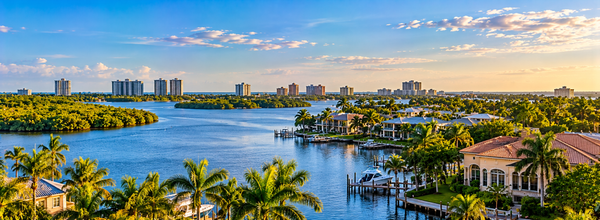
Naples Real Estate Risks: What Could Slow Appreciation

Naples real estate risks can slow appreciation when supply grows faster than buyer demand, financing costs reduce purchasing power, or ownership expenses rise. Buyers and investors should evaluate each property against its likely resale pool, carrying costs, and competing inventory rather than assuming market-wide appreciation will continue at the same pace. This guide identifies the variables that can limit or reverse price growth in Naples, along with practical signals to monitor before making an offer.
Who Should Read This
This guide is for buyers weighing long-term value, investors stress-testing a purchase, and current owners tracking equity risk in Naples. It does not predict a crash. Instead, it identifies the variables that can affect pricing power, resale timing, and total ownership costs across different property types, price ranges, and locations.
Naples Market Snapshot: 2026
Naples is a city in Collier County, and the figures below reflect the greater Naples area market for September 2026, the most recent full month reported. The numbers point to a market moving back toward balance after inventory built up in 2025.
| Metric | September 2026 | Change from September 2025 | What it can mean for appreciation risk |
|---|---|---|---|
| Median closed price | $575,000 | Up 4.5% | Monthly prices firmed, though the rolling 12-month median sits near $590,000 and has been roughly flat. |
| Active inventory | 4,240 | Down 17.3% | Fewer competing listings can ease near-term supply pressure on sellers. |
| Months of supply | 5.5 | Down from 7.8 | The market moved closer to balance, reducing buyer leverage compared with last year. |
| Average days on market | 99 | 8 days faster | Homes still take time to sell, giving buyers room to compare alternatives. |
| Share of list price received | 94.8% | Up from 93.9% | Sellers are still negotiating, but discounts have narrowed slightly. |
Figures as of September 2026.
Supply-Side Risk: What New Inventory Could Do to Prices in Naples
Supply-side Naples real estate risks are moderate. Inventory fell 17.3% over the past year, which reduces near-term pressure, but new competition can still affect individual property segments. Established coastal locations have relatively limited room for broad new development, while redevelopment, infill construction, condominium resales, and completed homes can still add meaningful choices for buyers.
The greater concern is usually concentrated supply rather than an across-the-board surplus. A cluster of similar condominiums, updated homes, or properties with comparable rental potential can pressure sellers to adjust price, offer concessions, or improve condition before listing. Older homes may face added competition when newer properties offer recent roofs, impact protection, updated systems, or lower expected maintenance requirements.
Lot availability and development potential also vary significantly within Naples. A location with few comparable listings may remain more insulated than a segment where owners are listing simultaneously or where redevelopment is delivering newer alternatives. Buyers should compare active listings, pending contracts, withdrawn listings, and price changes within the same property type and price band.
The earliest supply warning is a sustained increase in new listings without a matching increase in pending contracts. That imbalance can shift negotiating leverage toward buyers before closed-sale prices show a clear decline.
Demand-Side Risk: Population and Migration Trends
Demand-side risk is moderate because Naples benefits from lifestyle-driven, retirement-oriented, and second-home demand, but those buyers can become selective when financial markets or ownership costs change. Demand is influenced by tourism, consumer spending, construction activity, health services, and the ability of households to relocate capital into the area.
Population growth is one of the clearest demand signals to watch. Census estimates show Collier County reached about 417,131 residents in July 2025, up roughly 11% since 2020. However, the county added only about 400 residents between 2024 and 2025, compared with roughly 14,000 between 2021 and 2022. Because the county generally records more deaths than births, growth depends almost entirely on people moving in, and that inflow has slowed considerably.
Population growth matters only when it translates into enough qualified buyers for the homes coming to market. Naples can see slower appreciation if relocation inflows stay muted, seasonal demand weakens, or prospective buyers decide that insurance, taxes, association costs, and financing make another option more attractive.
Demand weakness tends to show up first in narrow buyer segments. Properties with high recurring costs, specialized layouts, deferred maintenance, or optimistic rental assumptions may take longer to sell when buyers have more alternatives. If you are weighing a purchase for rental income, it helps to review how investors approach Naples with these demand shifts in mind.
Affordability Ceiling: When Prices Outrun Buyer Purchasing Power
Naples real estate risks become more pronounced when home values and recurring ownership costs move beyond the reach of financed buyers. Collier County's median household income was about $90,000 for the 2020 to 2024 period, while the September 2026 Naples-area median closed price was $575,000, a ratio of roughly 6.4 times income.
There is no universal price-to-income level that automatically causes prices to fall. In practice, appreciation often slows when the monthly cost of ownership rises faster than the number of buyers able and willing to absorb it. Mortgage rates matter most in mid-range homes and condominiums, where a financed buyer's monthly payment can determine the maximum offer. Running a monthly payment estimate at a few different rates can show how sensitive a specific purchase is.
Naples has a meaningful pool of equity-rich and cash-oriented purchasers, which can reduce sensitivity compared with markets led primarily by first-time buyers. Still, financing conditions shape resale liquidity. A future buyer may need a mortgage even if the current owner does not, so high rates can narrow the eventual buyer pool and lengthen resale timelines.
Risk Factor Scorecard: Comparing Within Naples
The most useful property-level scorecard for Naples is directional: compare the same metrics within the specific community, property type, and price range under consideration.
For buyers and investors, the highest-priority comparisons are active inventory, pending sales, frequency of price reductions, total annual carrying costs, and the number of directly comparable homes likely to compete at resale. A coastal condominium and an inland single-family home can have very different risk profiles even when their purchase prices appear similar.
Interest Rate Sensitivity: How Rate Moves Hit Naples Specifically
Naples is less rate-sensitive than markets dominated by entry-level buyers, but borrowing costs still influence pricing and resale liquidity. Cash purchasers and buyers using equity from another sale can support demand, particularly in upper price segments. Financed buyers remain important in mid-range homes and condominiums, where the monthly payment shapes the final purchase decision.
The 2022 and 2023 rate cycle demonstrated how higher borrowing costs can slow transaction activity and extend decision-making across housing markets. In September 2026, mortgage rates were running above where they were a year earlier, and homes still averaged 99 days on market even as closed sales rose 2.5%.
Those figures do not establish that rates alone shape the market. They do show why entry price, recurring costs, and realistic resale assumptions matter more when buyers have time to evaluate alternatives. A buyer considering a long hold should also consider whether a future purchaser may face less favorable financing conditions.
Investor Concentration Risk
Risk label: Property-specific. Investor and seasonal ownership can support demand in Naples, especially for homes with rental potential, but it can also increase volatility when projected returns compress. If insurance, association expenses, maintenance costs, or rental restrictions change, owners relying on income may have less flexibility to hold through a slower market. Investors should review competing rental inventory, ownership rules, and conservative income assumptions before treating appreciation as the primary return source.
Environmental and Insurance Risk: The Hidden Appreciation Drag
Environmental and insurance risk is a major Naples real estate risk because coastal exposure can affect both ownership costs and buyer confidence. Hurricane exposure, wind mitigation, flood-zone status, roof age, elevation, building standards, and association insurance arrangements can all change the total cost of owning a particular property.
Buyers should verify a property's flood-map status through the official FEMA Flood Map Service Center and obtain insurance estimates early enough for those costs to influence the offer decision. Florida sellers are also required to provide a flood disclosure covering known flood damage and past flood insurance claims, which is worth reviewing closely. A property's flood designation is only one factor. Construction details, roof condition, deductibles, mitigation features, and the availability of coverage can also affect annual expenses.
Insurance pressure can become an appreciation drag when buyers revise their budgets after reviewing premiums, exclusions, deductibles, or association insurance costs. That can reduce the qualified buyer pool, lengthen marketing time, and increase requests for credits or price adjustments.
The risk is highly property-specific. Two homes with similar asking prices can have materially different ownership profiles based on their physical characteristics and insurance history. Buyers should model a range of annual insurance outcomes rather than relying on a single preliminary estimate.
Regulatory and Tax Risk: Policy Changes That Affect Naples Values
Regulatory and tax risk is most relevant for condominium buyers and rental-focused investors. Changes to association budgets, reserve planning, capital projects, rental restrictions, permitting practices, or local compliance requirements can affect both the flexibility and cost of ownership.
For condominium purchases, buyers should examine current budgets, reserve balances, meeting minutes, insurance arrangements, planned repairs, and possible assessments. For buildings three stories or taller, Florida now requires milestone inspections and structural integrity reserve studies, and those reports can reveal whether future costs may affect resale demand or a buyer's ability to qualify for financing.
Property taxes also deserve a forward-looking review. A buyer's future tax bill may differ from the seller's bill after a change in ownership and taxable value. Investors should evaluate taxes, insurance, association expenses, maintenance, and rental rules as one combined ownership-cost picture rather than treating each expense separately.
Pro-Tip: Track monthly pending sales against new listings in the exact Naples property category and price range you are considering. When new listings consistently exceed pending contracts, seller competition often rises before closed-sale prices visibly soften.
Frequently Asked Questions
Is Naples real estate at risk of a price drop?
A broad price drop is possible, but the more immediate risk is uneven performance across property types and price bands. The September 2026 median closed price of $575,000 was up 4.5% from a year earlier, while the rolling 12-month median has stayed roughly flat near $590,000, which suggests automatic appreciation should not be assumed.
What is the biggest factor that could slow appreciation in Naples?
Rising total ownership costs are among the most significant risks because they affect both buyer budgets and resale demand. Higher insurance costs, taxes, association expenses, maintenance needs, and mortgage payments can shrink the pool of buyers for a property.
How does investment risk vary within Naples?
Naples investment risk depends more on the individual property than on the city name alone. Coastal exposure, rental restrictions, association finances, competing inventory, and the amount of financing needed can produce very different outcomes between comparable-looking homes.
How do rising insurance or property-tax costs affect home values in Naples?
Higher recurring costs can reduce the price a buyer can comfortably support, particularly for financed purchases. Buyers should review FEMA flood-map information, insurance estimates, tax projections, and association obligations before deciding what a property is worth.
What signs should buyers watch to know if the Naples market is weakening?
Watch whether new listings are rising faster than pending sales in the same property category. Longer marketing periods, repeated price reductions, seller concessions, and an expanding number of direct competitors are also early signs that buyer leverage is increasing.
Make a Confident Move in Naples
Understanding risk is what turns a good-looking listing into a sound purchase. Marlo Kersey, PA, is a licensed Broker Associate and REALTOR® with Realty ONE Group MVP who holds the GRI designation and works with buyers, investors, and second-home owners across Naples. She can help you compare inventory and pending sales in your target segment, review flood zones and association documents, and weigh inspection findings and carrying costs before you make an offer. You can start by browsing Naples neighborhoods, then call or text (239) 784-5927 or reach out through the contact page for a straightforward review of a specific property.
Categories
Recent Posts